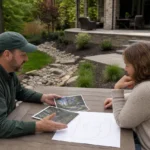
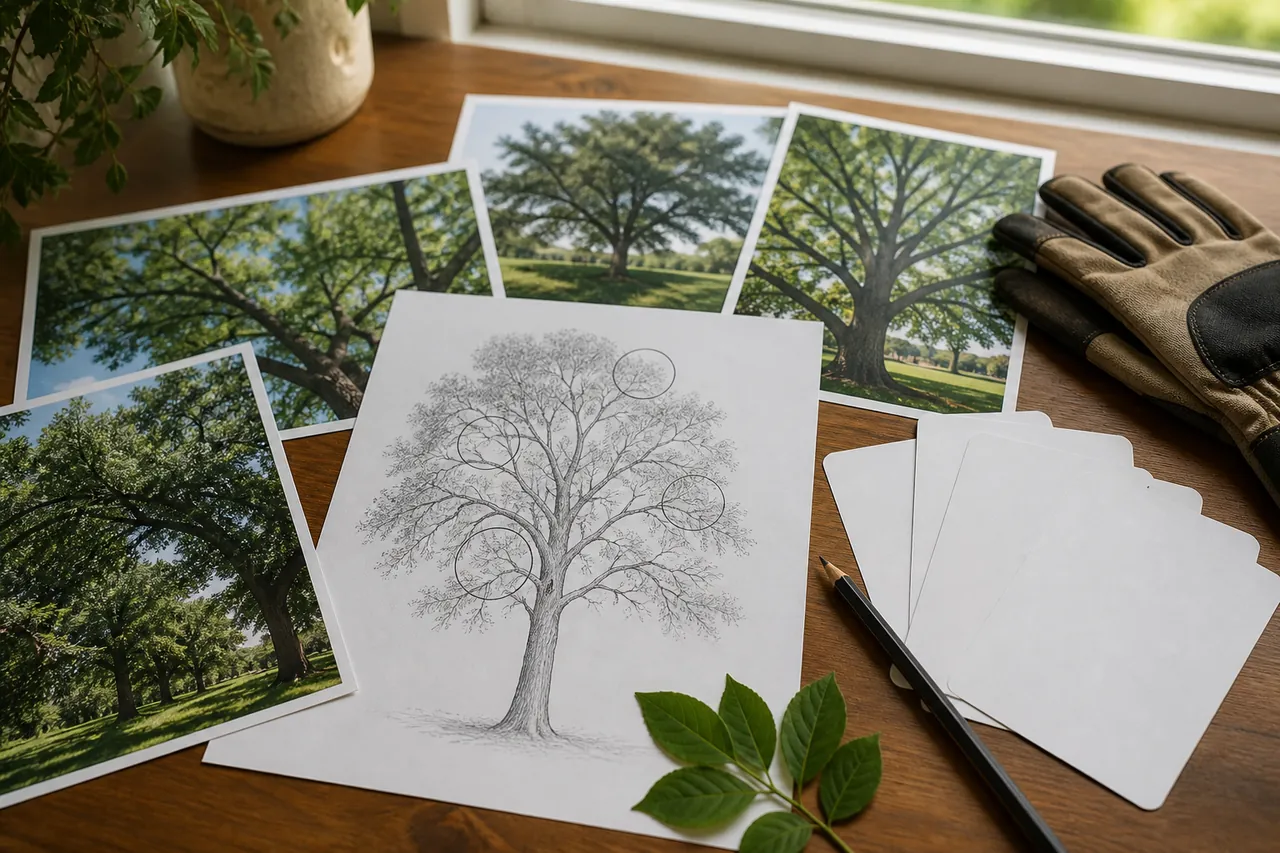
“Trim the tree” can describe goals that require very different decisions. Clearance from a roof, removal of dead branches, improved visibility, and long-term structural management are not interchangeable. Defining the desired result helps an arborist recommend work that responds to the tree and site instead of cutting toward an unclear visual target.
State the Reason for the Work
Begin with what has changed or what must function better. Identify branches contacting a structure, blocking a sign, extending over a path, or interfering with a planned project. If the concern is dead or damaged wood, record its location from the ground. If the goal is appearance, describe the desired character—such as preserving a natural outline—rather than requesting a fixed amount of foliage removal.
Avoid using height reduction, “topping,” or a percentage as shorthand without professional discussion. The acceptable approach depends on species, age, condition, branch structure, season, and the tree’s ability to respond.
Separate Common Objectives
Clearance work should name the feature needing space and the clearance objective to be evaluated. Deadwood work should define which dead or broken branches are included, because very small twigs and major limbs create different scopes. Structural pruning may focus on competing stems, weak unions, or developing form, but it requires assessment rather than a list created from ground photographs.
Visibility goals should identify the viewing area and what must remain screened. Utility clearance belongs with the appropriate qualified utility vegetation process; property owners should not direct ordinary workers to approach energized conductors.
Protect Tree Form and Function
Ask how the proposed cuts relate to branch collars, remaining crown distribution, and the tree’s current condition. Removing live foliage changes how the tree produces energy and responds to wind. More cutting is not automatically better, and a symmetrical outline is not always appropriate.
A proposal can identify priority branches or crown areas without promising an exact final shape before climbing inspection. Hidden decay, wildlife, storm damage, or access limitations may require the arborist to pause and explain a change.
Address the Property Around the Tree
Point out roofs, gutters, paving, fences, gardens, vehicles, lighting, and neighboring areas beneath the work. Discuss how the work zone will be controlled and where debris will travel. Confirm whether permission is needed for shared or boundary trees and who communicates with affected occupants.
If the tree contains a nest, cavity use, or other wildlife activity, report it before scheduling so applicable requirements can be considered. Do not disturb the area to confirm occupancy.
Define Completion in Observable Terms
The written scope should identify the tree, work objective, crown area, named branches or branch-size threshold when appropriate, debris handling, and exclusions. At handoff, review the tree from the same viewpoints used during planning. Ask what could not be completed, what should be monitored, and whether future pruning is recommended as a separate phase.
A strong trimming goal does not dictate dangerous technique or reduce the tree to a shape. It explains the problem the property needs to solve and the qualities that should be preserved. That gives the tree professional a clear target for judgment and leaves the owner with an understandable basis for reviewing the result.