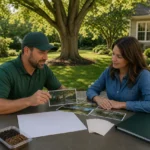
A tree assessment record should allow someone who was not present to identify the tree, understand the concern, see what was and was not inspected, and follow the resulting recommendations. It is a baseline for future decisions, not a permanent declaration that conditions will remain unchanged.
Identify the Subject and Purpose
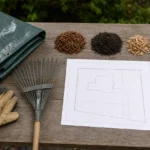
Record the tree’s location with a property reference, site sketch, or wide photograph. Include species and approximate dimensions when the assessor provides them, along with the assessment date, weather, and reason for the visit. “Review after branch failure” gives the observations a different context from “planning construction near tree.”
List nearby targets such as buildings, paths, parking, play areas, utilities, or neighboring property. The use and occupancy of those areas help explain why a condition matters without turning the record into a prediction.
Separate Observations From Conclusions
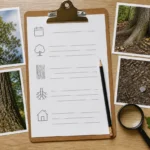
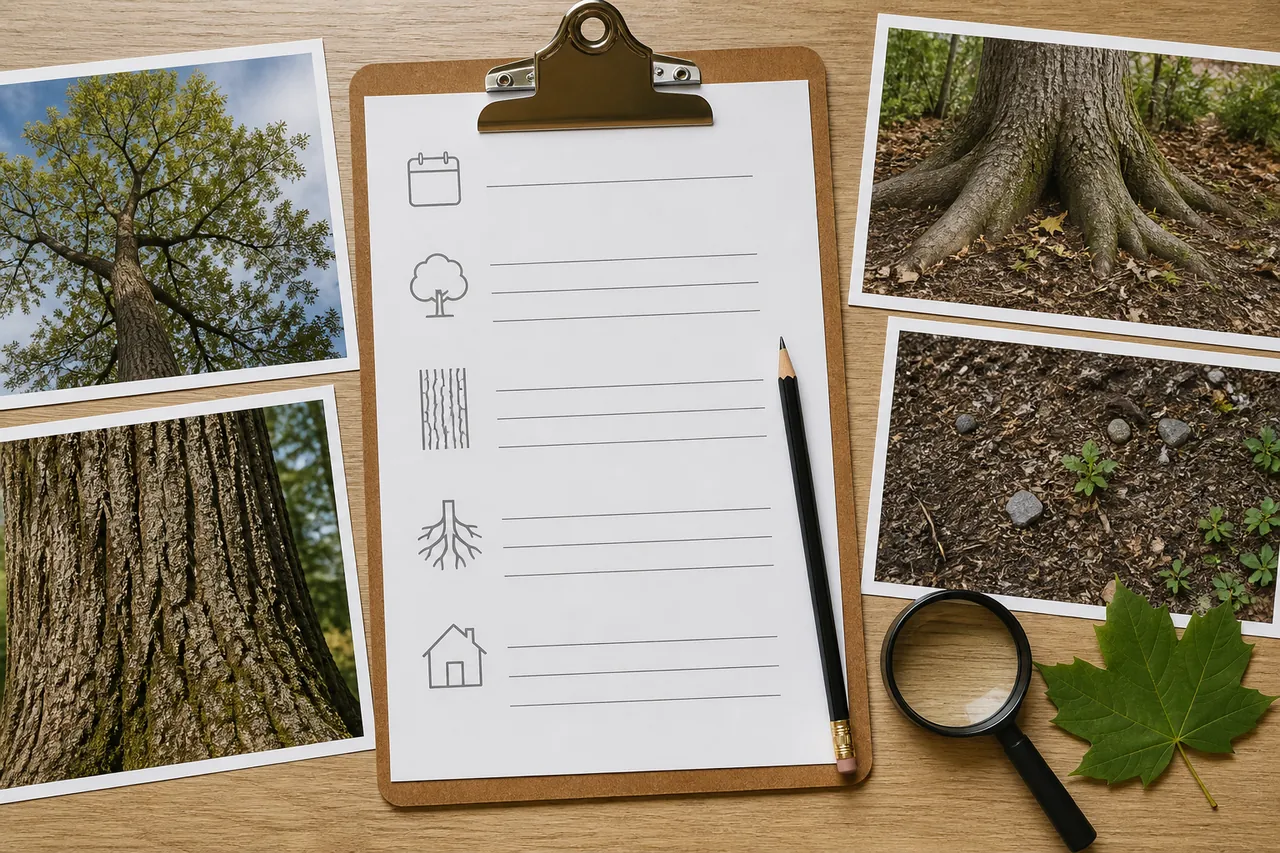
The record should describe crown density, dead or broken branches, trunk form, unions, cavities, fungi, root flare, soil condition, lean, prior pruning, and visible site changes as applicable. Photographs should be labeled by view and location. Close details make more sense when paired with an image showing where they occur on the tree.
Keep the professional’s interpretation separate from the raw observation. A visible cavity, for example, is an observation; what it means for management is a conclusion based on the broader assessment.
State the Inspection Method and Limits
Document whether the work was a ground-level visual assessment or included climbing, aerial access, sounding, probing, root investigation, laboratory work, or another method. Note areas hidden by vegetation, structures, soil, stored items, weather, height, or access restrictions.
Limitations matter because an assessment can only address conditions reasonably available through its stated method. If additional testing is recommended, record what question it is meant to answer and who is responsible for authorizing it.
Make Recommendations Actionable
For each recommendation, identify the tree, the proposed action, its priority or timing as stated by the assessor, and the condition it addresses. Distinguish pruning, support-system work, monitoring, site protection, additional assessment, and removal rather than combining them under “tree care.”
If the owner approves only part of the recommendations, preserve the full assessment and mark the chosen scope separately. A work receipt should not overwrite the original list or imply that deferred items disappeared.
Define Monitoring Clearly
“Monitor” should explain what to watch, from which safe viewpoint, at what interval, and after which events. Examples may include photographing a crack from the same location, noting further soil movement, or arranging reassessment after a major storm. Homeowners should not climb, probe cavities, tension support hardware, or enter a potential fall area to collect monitoring data.
Include the next professional review date when one is specified and the signs that warrant earlier contact.
Keep the Record Connected to the Tree
Store dated photographs, assessment documents, approved work, completion notes, and later observations together under the same tree identifier. Add construction or storm history that may affect interpretation.
A strong assessment record preserves identity, context, methods, limitations, observations, recommendations, and follow-up. It helps future providers understand what was known at a particular time while acknowledging that living trees and surrounding sites continue to change.