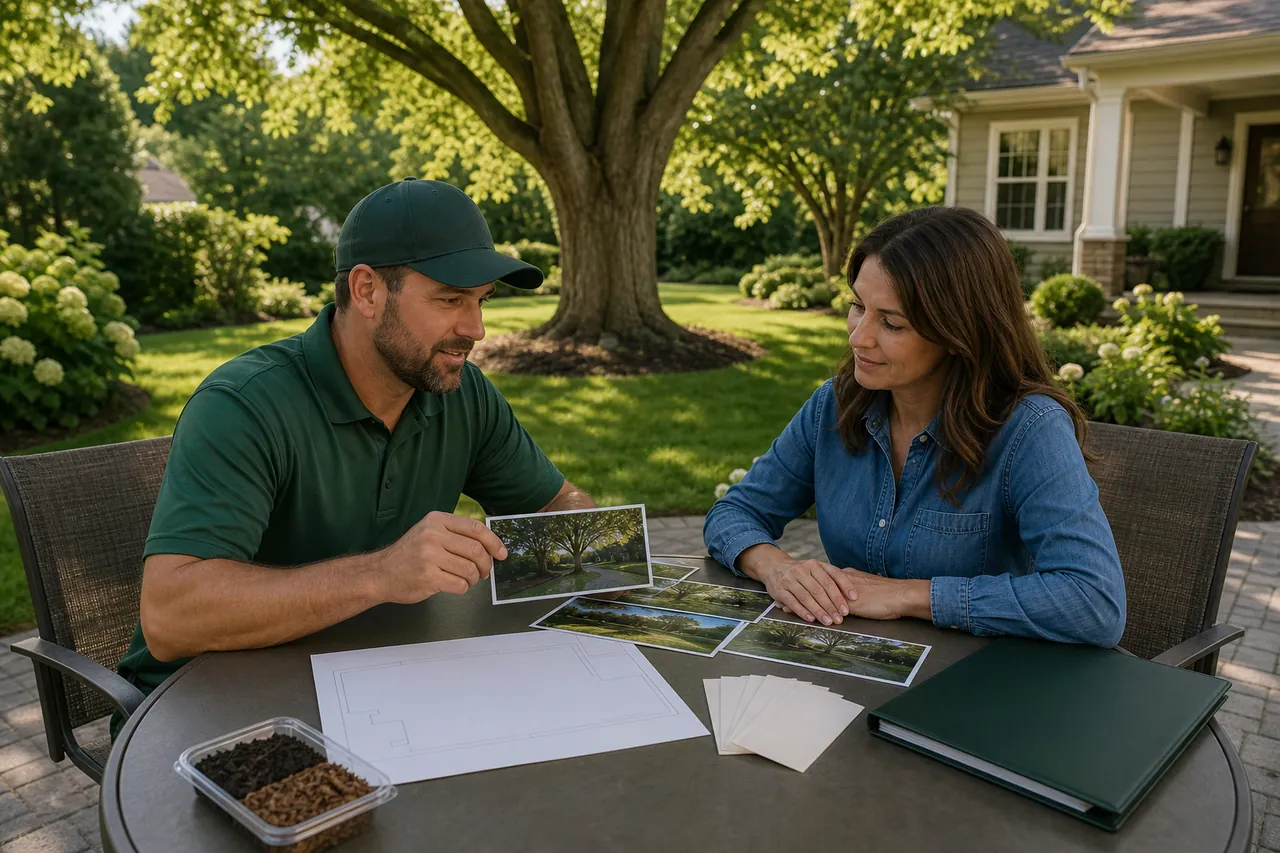
A tree project handoff closes the work record at the property, not just the invoice. It confirms which tree received which work, what material remains, how the site was left, and what future care or monitoring was recommended. This matters especially when several trees, phased recommendations, or separate stump and restoration decisions are involved.
Match Completion to Each Tree
Walk through the approved scope using the same tree identifiers from the proposal. For pruning, confirm the stated objective and crown area addressed. For removal, record whether the stump remains and at what general condition. For support work, identify the installed or serviced system. Do not combine multiple trees under a single “completed” note.
Ask the provider to explain any change made after work began. Hidden decay, wildlife, access limits, weather, or a condition found aloft may alter the safe approach. An agreed revision should be documented rather than left as a verbal memory.
Review the Site From Safe Viewpoints
Use the original planning photographs to look at the work zone, access route, structures, fencing, gardens, and surfaces. Confirm where logs, chips, grindings, and other retained materials were placed. Note remaining holes, depressions, ruts, exposed roots, or temporary protection.
A ground-level review does not require entering beneath a suspended concern or approaching unstable material. If an unsafe condition remains, establish the boundary and record the next response before normal property use resumes.
Collect Care and Monitoring Guidance
Ask what owner care is appropriate for the completed work and which activities should be avoided. Newly planted trees, root-zone work, pruning, support systems, and disturbed soil may have different follow-up needs. Guidance should identify the actual tree and site rather than rely on a generic sheet alone.
For monitoring, record what condition to observe, the safe viewpoint, the interval, and the event that warrants earlier contact. Do not climb, probe, pull hardware, cut additional branches, or excavate roots as part of owner monitoring.
Preserve Assessment and Product Information
Keep the original assessment, approved proposal, revisions, completion notes, and dated before-and-after photographs together. Add support-system information, treatment or material details provided, stump scope, and disposal decisions. If another contractor or utility participated, distinguish its record from the tree company’s work.
A future arborist should be able to see what was recommended, what was authorized, and what was deferred. Never replace the assessment with a shortened completion receipt that erases open items.
Name Every Remaining Responsibility
Create a final list for restoration, replanting, utility follow-up, structural repair, permit closure when applicable, or a scheduled reassessment. Assign the responsible party and note any access or timing dependency. If no further tree work is planned, retain monitoring expectations rather than implying the tree will never change.
Before the crew leaves, verify that gates, shared access, and normal property routes are restored as agreed and that occupants know about any exclusion area.
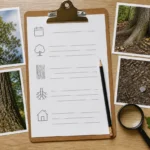
A complete handoff is concise but specific: tree identity, completed action, changed scope, site condition, retained material, care, monitoring, and unresolved work. That record supports continuity long after the visible project ends and gives the owner a clear basis for the next safe decision.