Trees respond to the space around them, so changes made for a driveway, addition, drainage project, garden, or utility route belong in any later tree conversation. The visible symptom may appear in the crown, but the relevant history may be at ground level months or years earlier. A clear site timeline helps a tree professional evaluate that relationship without assuming every change caused damage.
Construction Changes the Root Environment
Excavation can remove roots, while repeated vehicle or material traffic can compact the soil that remains. Trenches for utilities, irrigation, drainage, or lighting may cross important root areas even when the cut looks narrow. New paving, foundations, retaining features, and grade beams can also change available soil and access to water and air.
Record where work occurred in relation to the trunk and when it was completed. Save plans, progress photographs, and notes about unexpected roots encountered. Do not cut, cover, or expose roots to create evidence for an assessment.
Grade and Drainage Deserve Their Own Timeline
Adding soil over an existing grade can alter conditions around roots and the trunk flare. Removing soil can expose or damage roots. New downspout routes, swales, drains, walls, and paved areas may concentrate water in one location or divert it away from another.
Note standing water, erosion, unusually dry soil, buried flare, and changes in runoff after rainfall. Avoid diagnosing “too much” or “too little” water from one observation. Soil texture, weather, species, root condition, and the wider drainage pattern all influence what the tree experiences.
Landscaping Can Be a Significant Site Change
Raised beds, deep mulch, new turf, irrigation adjustments, herbicide use, soil cultivation, and replacement plantings can alter the root zone. Even a well-intended change may matter if it adds material against the trunk, changes watering frequency, or requires repeated digging.
Keep product and installation information when available. Record when irrigation zones were added, removed, or reprogrammed and where emitters or lines are located. Do not excavate to trace a line near the tree; maps and installer records are safer sources.
Share Changes Before the Next Project Starts
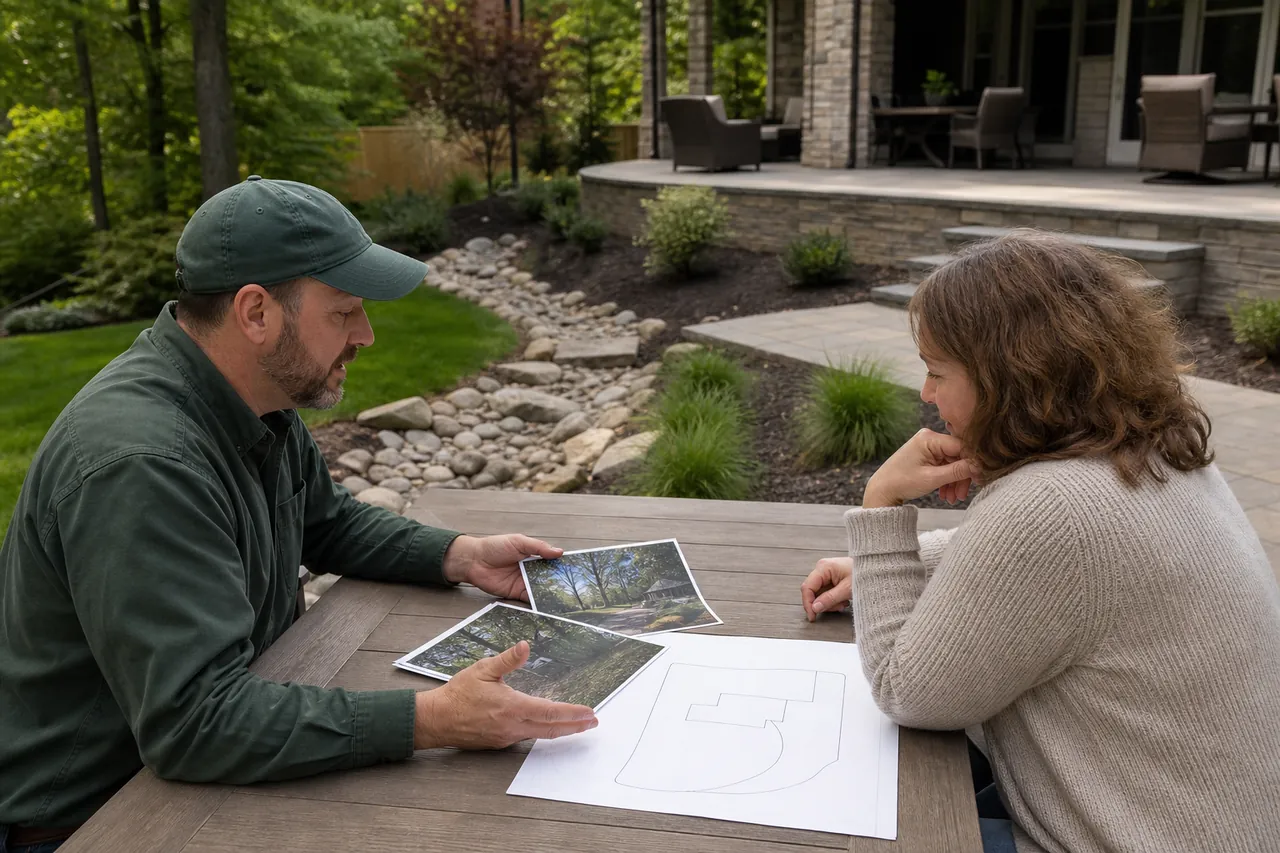
The best time for a tree conversation is often during planning. Show the tree professional proposed limits of excavation, staging, access routes, storage areas, and final grade. Ask what protection zone and monitoring approach are appropriate for the specific tree and project. Tree protection should be communicated to every trade whose work crosses the site, not left as a note known only to the owner.
If a route cannot avoid the root area, the project team may need to consider alternatives. The tree professional can explain concerns, but design, engineering, utility, and permitting responsibilities should remain with the appropriate parties.
Connect Later Symptoms to the Record
For crown thinning, early color change, small leaves, branch dieback, fungal growth, or a changed lean, provide the construction and landscape timeline along with current photographs. These symptoms are not specific to one cause. An assessment may also be limited by buried roots, inaccessible areas, weather, or incomplete historical information.
A useful record shows what changed, where it changed, how the ground and drainage now behave, and when the tree response was noticed. That context supports a more informed assessment and reminds everyone that tree condition is linked to the living site around it, not just to the branches visible overhead.