Cables, braces, and related tree-support systems are installed for a particular structural concern and a particular tree. They may help manage movement or load as part of a professional plan, but they do not make a tree permanently safe and should not disappear from the property record after installation. Monitoring keeps the original purpose, hardware identity, and follow-up expectations visible.
Record Why the System Exists
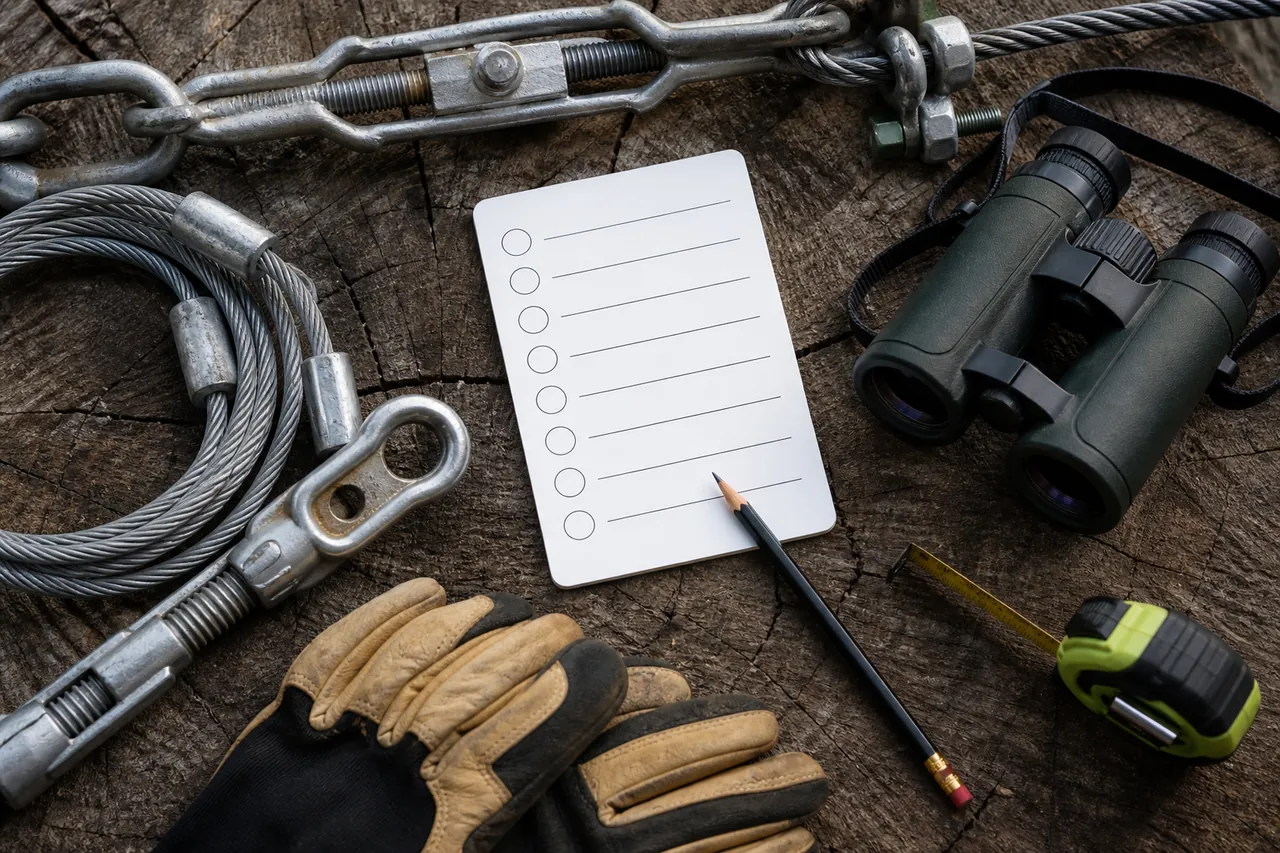
The installation file should identify the tree, the supported stems or branches, the condition being addressed, and the intended function of the system. Include the date, installer, hardware type, configuration, and any product or inspection guidance provided. Wide photographs should show where the system sits in the crown, while closer professional photographs can document attachment points.
Avoid a record that says only “tree cabled.” A future arborist needs to know whether the objective involved limiting separation, supporting a specific branch, supplementing a brace, or another defined concern.
Understand What Monitoring Can and Cannot Do
Ground-level monitoring may show a changed branch position, a new crack, broken or hanging hardware, unusual slack, contact with bark, or growth around an attachment. These are observations to report, not instructions to adjust the system. Hardware can be high in the crown and under load; owners should never climb, pull on a cable, tighten a rod, or strike components to test them.
Some important conditions are not visible from the ground. Professional inspection may require climbing or aerial access to examine attachments, corrosion, wear, branch growth, and the surrounding wood. The installer or arborist should specify the appropriate review interval for the system and tree rather than relying on a generic calendar.
Recheck After Significant Events
A major storm, branch failure, construction near the roots, impact, or a noticeable change in lean may justify earlier contact. Keep people away if a supported branch has shifted, hardware appears broken, or a large crack has changed. A support system is not a reason to remain beneath a damaged tree.
Photograph only from a safe distance and compare the view with earlier dated images. Record the event and time, even when the hardware itself cannot be seen.
Include the Whole Tree in Follow-Up
Monitoring should not focus so narrowly on the cable or brace that changes elsewhere are missed. New deadwood, decay, root-zone disturbance, soil movement, crown loss, or growth can affect the management conversation. The original structural concern may also evolve as the tree adds wood and branches change position.
Ask whether pruning, site changes, or later construction could alter loads or access to the system. Any proposed work should be coordinated with a qualified tree professional who understands the existing support plan.
Preserve a Transferable History
Keep every inspection date, method, observation, recommendation, and completed action with the installation record. Mark hardware replacement or modification clearly rather than editing the original description. When the property changes hands, transfer the file and point out the tree’s identifier and next scheduled review.
Tree support monitoring is a continuing management task, not a homeowner hardware check. A precise record and safe ground observations help the arborist see change over time, while climbing inspection, testing, adjustment, and decisions about retention remain professional responsibilities.