Stump grinding affects a small-looking area that may contain roots, utilities, irrigation, hardscape, buried metal, and plans for future use. A good scope begins with the stump and extends to everything the machine must cross or avoid. It also defines what “finished” means, because grinding does not automatically create a ready-to-build or ready-to-plant site.
Identify the Stump and Intended Use
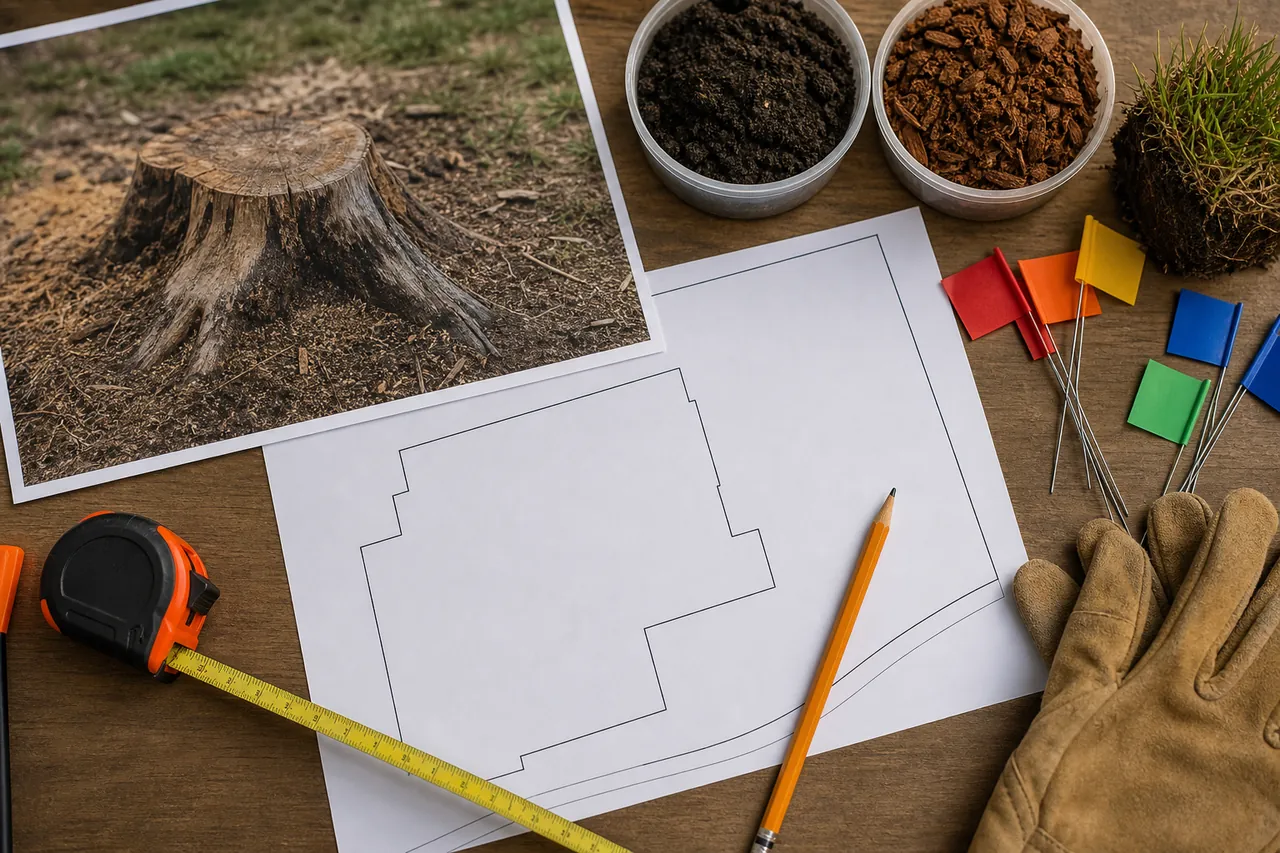
Label the stump by location and note whether it came from a recent removal or has been weathering for some time. Measure the visible stump across its widest points at ground level only if it is safe and accessible. Photographs should show the stump, surrounding grade, and nearby features.
Explain what you hope to do with the area afterward: establish lawn, prepare a planting bed, replant, install a surface, or simply remove a trip obstruction. The desired use helps the contractor discuss grinding depth and restoration limits, but it does not mean that all roots or underground wood will be removed.
Map Access Before the Appointment
Record the narrowest gate or passage, turns, steps, slopes, soft ground, and surfaces between the entry point and stump. Point out fences, air-conditioning equipment, garden beds, low branches, and overhead obstacles. Ask what machine dimensions and ground protection the planned work require.
Do not remove a fence panel, alter landscaping, or provide access across neighboring property until responsibility and permission are confirmed in writing. If recent rain or irrigation has softened the route, notify the provider before equipment arrives.
Treat Underground Conditions Seriously
Arrange required utility locating through the appropriate process and disclose private lines that public locating may not cover. Irrigation, landscape lighting, pet containment, drainage, fuel lines, and privately installed electrical runs can be difficult to see. Share plans or installation records when available.
Never probe or excavate around a stump to find a line. Also mention embedded fencing, nails, concrete, stones, or hardware known to be near the tree. The contractor may need to reassess the safe grinding area when an obstruction is discovered.
Define Depth and Root Scope
Ask how grinding depth will be measured relative to the current grade and whether visible surface roots are included. Large roots can extend far beyond the stump; “grind stump” should not be interpreted as removal of the entire root system. Work near paving, foundations, retaining features, or living trees may require a narrower limit.
If construction is planned, coordinate the requirements with the relevant project professional. Stump grinding alone does not confirm soil bearing capacity or suitability for a footing.
Decide What Happens to Grindings
A ground stump produces a mixture of wood chips and soil. Specify whether grindings will remain in the hole, be piled, spread, or removed, and whether imported soil or final grading is included. Excess material may be greater than the apparent stump volume.
At completion, review the defined area, remaining roots, grade, access route, and any surface damage or open restoration item. Keep children and pets away until the area is stable and any hole is addressed.
Careful planning turns stump grinding into a clear site project. The record should cover identity, access, utility information, depth, included roots, material handling, and the next use—while leaving underground investigation and machine operation to the tree service.