After a storm, the first priority around trees is distance. Broken branches can remain suspended, trunks may be under unfamiliar load, and saturated or lifted soil can change stability. Record only what can be seen from a secure location. Do not walk under damaged crowns, climb over fallen material, or move branches to improve access.
Establish the Immediate Boundary
Look for downed electrical lines, branches contacting utilities, leaning trunks, hanging limbs, split unions, and soil rising at the root area. Keep people, pets, and vehicles outside the space that damaged material could reach. Tape or a closed gate can help communicate a boundary, but setting it should not require entering the hazard area.
If a line is down, there is arcing or fire, or a tree is creating an immediate danger to people, follow the utility or emergency authority’s instructions. Do not assume a branch is safe because the line appears inactive.
Record the Weather Sequence
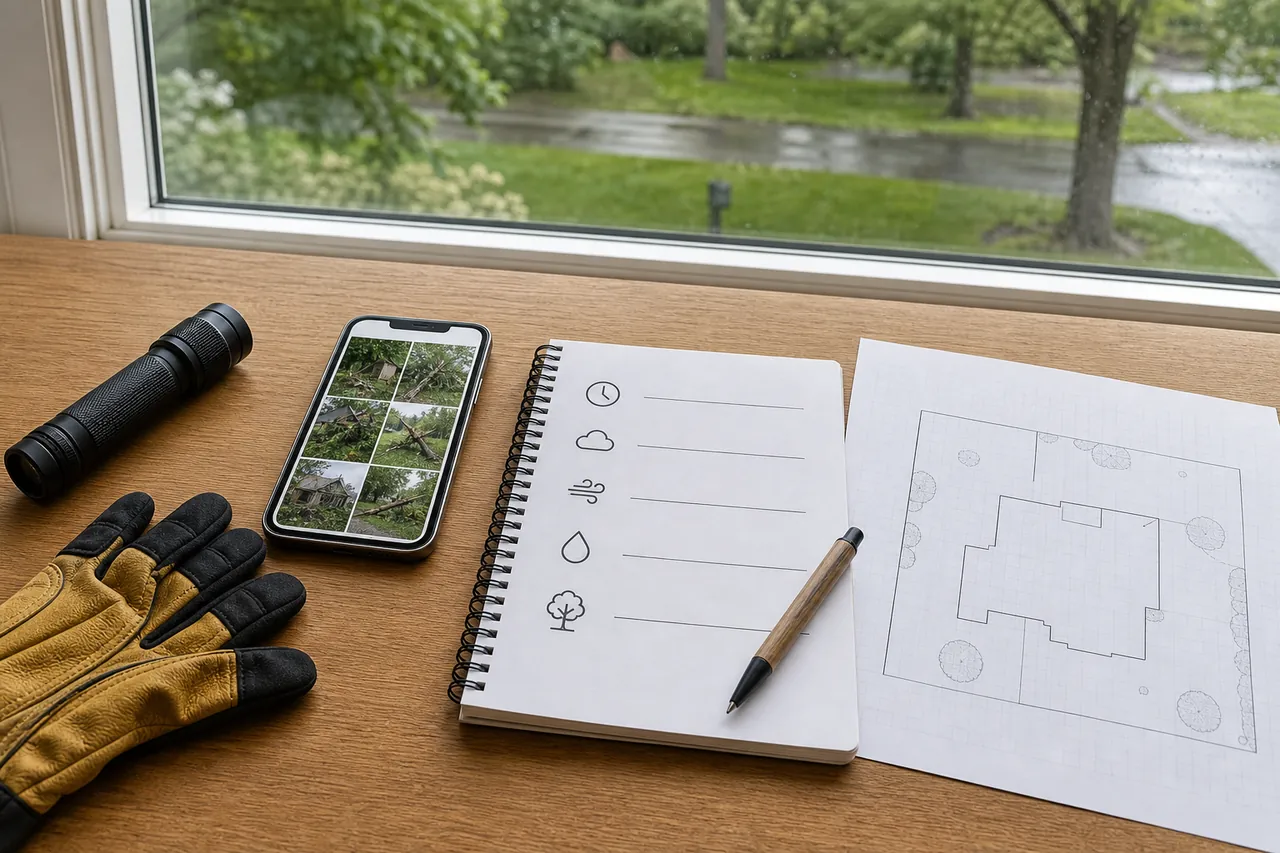
Write down the approximate time of the storm and when the tree change was discovered. Note the conditions you observed—strong wind, heavy rain, saturated ground, ice, lightning, or another event—without declaring which one caused the damage. If there were several storms, keep them in order.
Include whether the tree had an earlier lean, cavity, dead branch, support system, or previous storm damage. Earlier photographs can be valuable because they show what was present before the latest event.
Describe Each Tree Separately
Give every affected tree a location label and photograph it in the context of the property. Note the direction of lean or failure by referring to a fixed feature, such as “toward the detached garage,” rather than an uncertain compass direction.
From outside the potential fall area, record visible crown loss, suspended limbs, torn bark, cracks, a changed trunk angle, exposed roots, and lifted soil. Include the size only as a rough visual reference; a tree professional should make measurements needed for the work plan. Avoid standing beside a branch or trunk for scale.
Explain What Is Blocked or Exposed
Tell the provider whether damage blocks the driveway, an entrance, a street, a gate, or access to essential equipment. Mention buildings, vehicles, fencing, neighboring property, and other trees that were struck. If a structure is damaged, do not enter it solely to photograph the tree.
Also describe ground conditions and the available approach for personnel or equipment. Flooded areas, soft lawns, steep slopes, debris, and hidden drainage features can affect a safe response.
Preserve Useful Images and Updates
Take wide photographs before detail views, using zoom rather than moving closer. Label the files by tree and time. If the condition changes—another branch falls, a crack widens, or the trunk angle shifts—record the new time from the same protected position and increase the exclusion area.
Do not cut attached branches, release bent saplings, or separate trees that are resting against one another. Storm-loaded wood can move rapidly when tension changes.
A concise storm report lets a tree service prioritize the visit: location, timing, visible failure, utility involvement, affected targets, access, and change over time. It does not replace an on-site assessment. Maintaining distance and leaving disturbed material in place gives the responding professional a clearer and safer starting condition.