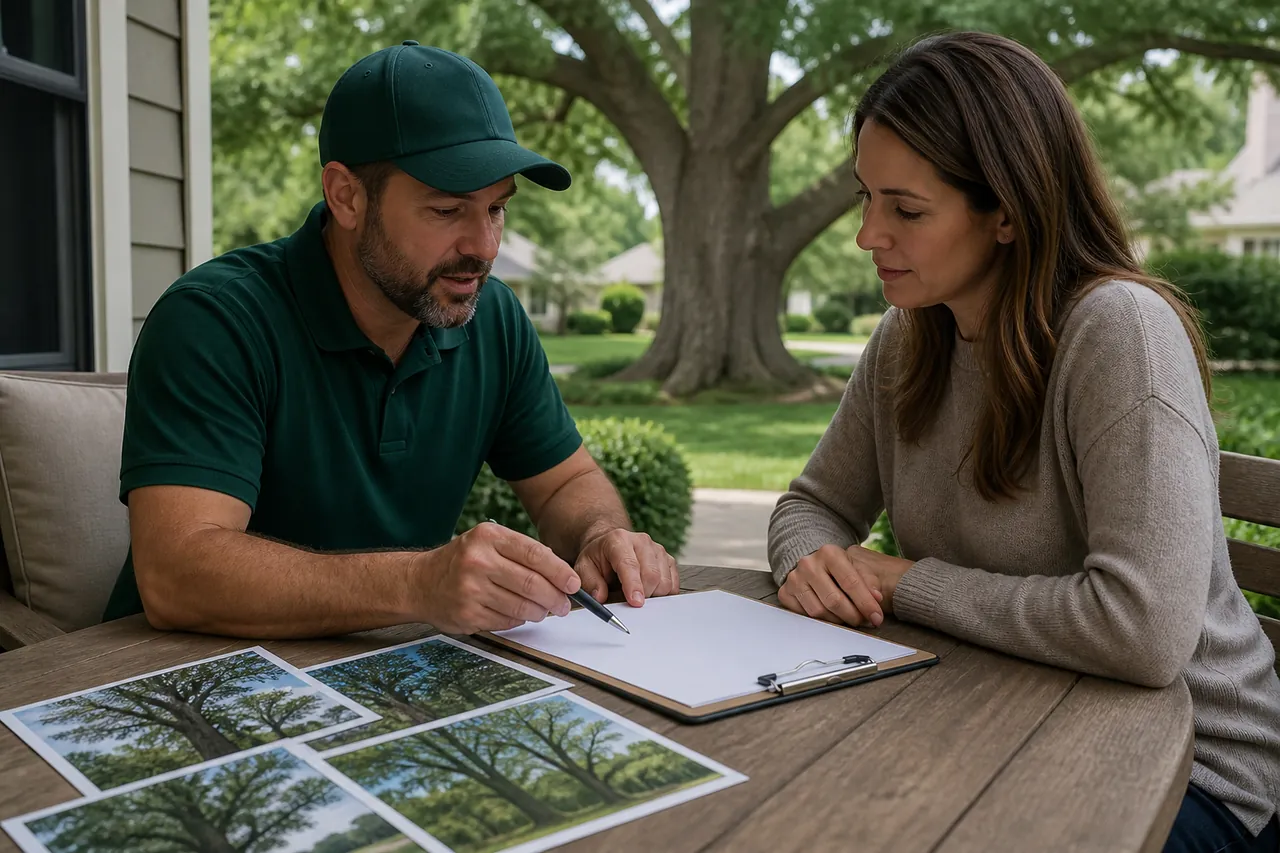
A tree removal proposal should describe more than “remove tree.” The method, access, protection, debris handling, stump decision, and condition of the site afterward all affect the project. Asking these questions before approval helps the property owner and tree company understand the same boundaries without assuming that every related task is included.
Which Tree and Why This Scope?
Identify the tree by location and, when known, species. Mark it only through a method agreed with the provider; an ambiguous mark can create a serious error when several trees are close together. The written scope should state why removal is being considered and whether the recommendation followed an assessment, property project, storm event, or owner objective.
Ask whether any applicable permission, property authorization, or utility coordination must be confirmed before work. Requirements vary, so responsibility for checking them should be explicit rather than assumed.
How Will the Tree Be Accessed?
Discuss gate widths, slopes, pavement, soft ground, overhead lines, nearby buildings, fencing, plantings, and space for equipment. Ask where vehicles or machinery would enter and what surfaces need protection. If access crosses another property or shared area, confirm authorization before scheduling.
The provider should explain the planned work area and what occupants need to keep clear. Moving vehicles, play equipment, outdoor furniture, or fragile items in advance may help, but no preparation should require approaching a damaged or unstable tree.
What Does “Removal” Include?
Clarify whether the scope ends with the trunk near grade or includes stump grinding. Ask how low the remaining stump will be if it is not ground and how exposed roots will be treated. Stump grinding depth, accessible roots, buried obstructions, and the intended future use of the area should be separate line items when relevant.
For trees near structures or other plants, ask how sections will be controlled and what adjacent items are included in protection. The contractor determines the safe method; the owner’s role is to identify priorities and site constraints, not direct rigging or cutting technique.
Where Will the Material Go?
Decide whether logs, firewood-length pieces, chips, small debris, and stump grindings will be removed, left in a designated location, or handled another way. “Cleanup included” should specify the work area and the material it covers. Large wood, fine sawdust, scattered twigs, and ground stump material are different outputs.
If retained wood matters, identify acceptable piece size and placement in writing. Do not assume freshly cut or storm-damaged wood is suitable for a particular indoor or outdoor use without separate evaluation.
What Restoration Follows?
Ask whether ruts, disturbed soil, surface sweeping, fence removal and replacement, or basic backfilling are included. Lawn repair, planting, paving, irrigation work, and final grading may belong to another scope. A stump-grinding area can settle, so the handoff should state what material remains and what future preparation is needed before replanting or construction.
How Will Completion Be Documented?
The final record should identify the tree, work completed, retained material, stump status, site condition, and any item left open. Photograph the area from established viewpoints before and after work.
A precise removal scope protects against vague expectations. It connects the actual tree and site with access, material handling, and restoration decisions, giving the provider room to select a safe work method while giving the owner a clear definition of completion.